
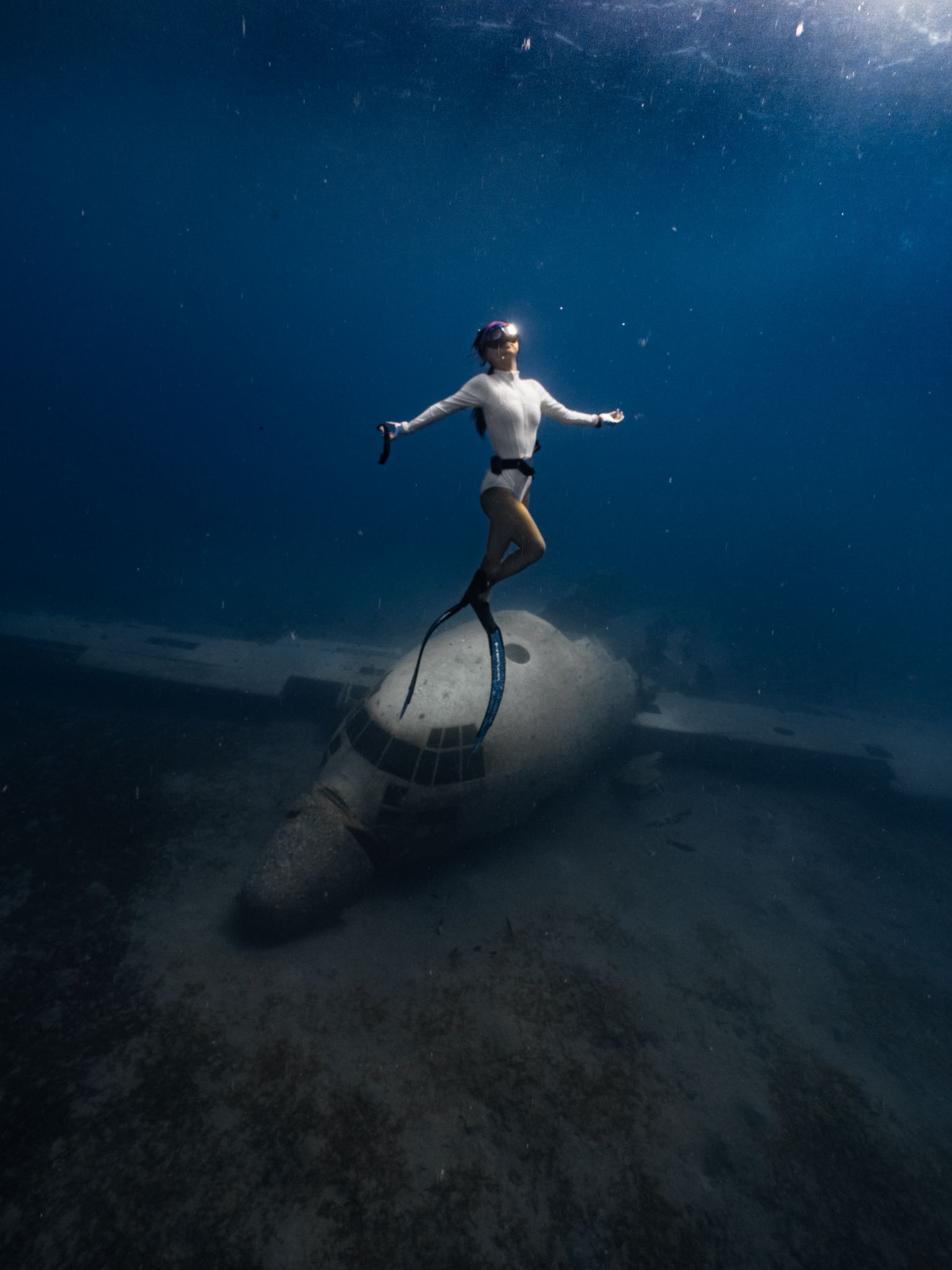
Dive the C-130 Hercules in Aqaba, Jordan. Learn the true history of this military transport plane, sunk in 2017 and later broken by a storm into a stunning ‘real wreck.’ Depth 17m, perfect for PADI Open Water divers and wreck enthusiasts.

Introduction: The Royal Jordanian Air Force Becomes an Artificial Reef
The C-130 Hercules dive site is one of Aqaba’s most famous wrecks and a cornerstone of Jordan’s artificial reef project. It was a former Royal Jordanian Air Force transport aircraft, purposely scuttled to promote eco-tourism and create a new marine habitat.
The C-130 is uniquely accessible due to its shallow depth and proximity to the shore, making it an excellent first wreck dive for certified divers.
Key Wreck Metrics
| Feature | Detail |
| Sinking Date | November 16, 2017 |
| Aircraft Type | Lockheed C-130 Hercules Military Transport |
| Original Condition | Sunk intact and upright. |
| Current Condition | Broken into several large sections (due to 2020 storm). |
| Length/Wingspan | Approximately 30 meters long / 40-meter wingspan. |
| Maximum Depth | 17 meters (56 feet) |
The Great Transformation: From Reef to ‘Real Wreck’
The Impact of the March 2020 Storm
The C-130 was originally sunk intact, resting perfectly upright. However, in March 2020, a fierce storm swept through the Gulf of Aqaba. The strong currents and waves ripped the aluminum fuselage apart.
- Before 2020: The plane looked like it was simply “parked” underwater.
- After 2020: The plane was torn into several pieces, with the main body separated from the tail and wings.
While the damage was unfortunate, many divers now agree that the scattered sections give the C-130 the appearance of a “genuine wreck,” creating a more dramatic and dynamic exploration site that continues to attract a vibrant array of marine life.
ARE YOU INTERESTED IN THIS DIVE?
Dive Site Highlights and Unique Features
The C-130 offers several unique attractions that make it highly sought after by photographers and recreational divers.
The Skeleton Pilot
One of the most famous and photographed features of the C-130 is the plastic skeleton installed in the pilot’s seat of the cockpit. This morbid but humorous detail, sometimes dressed in a flight helmet, makes for an iconic underwater photograph and adds a surreal touch to the dive.
Accessible Interior and Open Cockpit
The cargo hold and cockpit were deliberately prepared before sinking, with doors and windows removed to allow natural light and provide multiple easy exit points.
- Cargo Hold: The large, open interior is easy to swim through and is often filled with schooling fish, making it an ideal environment for Wreck Specialty training.
- Cockpit: The front is largely intact (though separated from the fuselage) and offers a great photo opportunity with the skeleton co-pilot.
The Neighboring M42 Tank
The C-130 Hercules is located adjacent to another famous, smaller wreck: the M42 Duster anti-aircraft tank. This proximity means the two sites are often combined into a single, extended dive profile, with the shallow M42 Tank (at 6m) serving as a perfect final stop or a decompression safety stop for divers finishing their exploration of the Hercules.

Certification and Dive Logistics
This wreck is perfectly suited for divers of all experience levels due to its shallow depth.
Required Certification
- Minimum Level: PADI Open Water Diver (or equivalent certification from SSI, CMAS, etc.). The maximum depth of 17 meters is well within the limits for a beginner.
- Wreck Penetration: While the storm has created open sections, formal training is always recommended. If you wish to practice wreck diving techniques, this site is ideal for the PADI Wreck Diver Specialty Course.
Access Options
- Shore Dive: The C-130 is located approximately 300 meters from the South Beach shore, making it highly accessible directly from the beach.
- Boat Dive: Boat trips offer a comfortable experience, often combining the Hercules with other nearby wrecks like the M42 Tank or the much larger Lockheed TriStar (L-1011).
Book Your C-130 Wreck Adventure with Sea Wonders
Ready to explore one of the world’s most unique aircraft wrecks? Sea Wonders Diving Center offers guided tours, night dives, and specialty courses to help you get the most out of this incredible site.
- Snorkeling & Freediving: Due to the clear water and shallow depth, the C-130 is also easily viewed by snorkelers and is a popular spot for certified freedivers.
- Guided Dives: Explore the wreckage with local experts who can point out the best photo spots and marine life.
- Boat Dive Package: Our trips include equipment, lunch, soft drinks, and transportation.
- Night Diving: The C-130 is an exciting site for a night dive, where you can see nocturnal marine life taking refuge in the fuselage.
- Wreck Diver Specialty Course


FAQ
What was the primary mission of the C-130 Hercules aircraft before it was sunk?
The C-130 Hercules served as a long-range military transport aircraft for the Royal Jordanian Air Force before being retired and decontaminated for use as an artificial reef.
Were the engines and propellers left on the C-130 before it was scuttled?
No. All four engines and the propellers were removed before sinking as part of the rigorous decontamination process to ensure zero environmental harm from fuel or oils.
What specific type of marine life often uses the wings for shelter?
The underside of the large wings provides stable surfaces and shelter. They are frequently covered in vibrant soft corals and are a known refuge for Lionfish and schools of small glassfish.
How close is the C-130 Hercules wreck to the much larger Lockheed TriStar plane wreck?
The C-130 is relatively close to the TriStar (L-1011). Divers often visit the C-130 and the nearby M42 tank on the same dive, and the larger TriStar is typically saved for a separate, deeper dive nearby.


